International UAP Disclosure: Japan, Brazil, France, UK & Global UFO Programs
Updated October 5, 2026 · 12 min read
Summary
UAP investigation is a global, not American, phenomenon. At least thirteen national governments — France (GEIPAN, since 1977), the UK (MoD desk, 1950–2009), Brazil, Uruguay (CRIDOVNI, since 1979), Chile (CEFAA), Peru, Argentina, Canada, Japan (formal protocols since 2020), Australia, New Zealand, Russia, and China (PLA AI unit since 2021) — have run formal UAP investigation programs. Transparency varies dramatically: France and Chile publish case data openly; the U.S., Russia, and China remain more restricted. The breadth of programs across allied and adversarial nations underscores that the underlying phenomenon presents itself across jurisdictions.
Recent Catalyst — May 8, 2026
The U.S. has now formally entered this international landscape with the launch of the Presidential Unsealing and Reporting System for UAP Encounters (PURSUE) at war.gov/UFO. The U.S. approach — coordinated multi-agency rolling release with Cabinet-level statements — sits between the institutional secrecy of Russia and China and the public-record openness of France's GEIPAN and Chile's CEFAA. The first PURSUE tranche includes State Department cables from U.S. embassies in Papua New Guinea, Kazakhstan, Turkmenistan, Georgia, Mexico, and Tajikistan documenting UAP incidents reported between 1985 and late 2025 — institutional acknowledgment that UAP encounters are documented across continents in U.S. diplomatic records. Live coverage of the PURSUE release →
The current U.S. disclosure cycle has dominated headlines, but the question of unidentified aerial phenomena is not an American question. At least thirteen national governments have established formal UAP investigation programs, declassified historical files, or instituted official reporting frameworks. Understanding this international landscape is essential context — both for evaluating what the U.S. is now releasing through PURSUE, and for assessing how a confirmation event would propagate globally. For the U.S. side of the story, see our UAP disclosure timeline.
The following is a reference guide to government UAP programs and disclosure efforts beyond the United States. Each entry summarizes the institutional history and current status, sourced to primary government documents and major media reporting.
Western Europe
France
GEPAN · SEPRA · GEIPAN at CNES — 1977 to present
France operates the world's longest continuously-running government UAP investigation program and is the only major Western government to have maintained transparent civilian-led UAP investigation for nearly five decades. The program was established in 1977 as the Groupe d'Études des Phénomènes Aérospatiaux Non identifiés (GEPAN) within CNES, the French national space agency. It was reorganized as SEPRA in 1988 and rebranded to its current name GEIPAN (Groupe d'Études et d'Informations sur les Phénomènes Aérospatiaux Non identifiés) in 2005. GEIPAN operates as a civilian agency under CNES with formal institutional cooperation from the Gendarmerie Nationale, the Air and Space Force, civil aviation authorities, and Météo-France.
GEIPAN publishes its complete case file archive publicly through its online database, categorizing each case A through D based on the level of explanation achieved (A: identified; B: probably identified; C: insufficient data; D: unknown). Of the thousands of cases catalogued over the program's history, approximately 14% have been classified as Type D — genuine institutional unknowns that resist mundane explanation.
The most institutionally significant case in the GEIPAN archive is the Trans-en-Provence incident of January 8, 1981, in which a French civilian witnessed a metallic disc landing in his garden in Var, France. Soil and vegetation samples collected at the landing site by French gendarmes were analyzed by multiple French government laboratories under GEPAN supervision and revealed physical alterations to plant biochemistry, soil mineralogy, and trace element distribution consistent with intense pressure, heat, and possibly electromagnetic exposure. The Trans-en-Provence case remains one of the most rigorously documented physical-trace UAP cases in any government archive worldwide.
As of August 2026, CNES and GEIPAN have not issued a formal institutional response to the U.S. PURSUE program launch. France's institutional approach — transparent ongoing civilian investigation with published case files — contrasts structurally with the U.S. approach of classification followed by retroactive release. If France issues a coordinated response, its longstanding open-access archive positions it to do so substantively.
United Kingdom
Ministry of Defence UFO Desk — 1950 to 2009
The UK Ministry of Defence operated a dedicated UFO investigation desk from approximately 1950 until its closure in December 2009. The MoD has since released its historical UFO files in tranches through the National Archives, comprising tens of thousands of pages spanning sightings reports, internal memos, and policy correspondence. Notable files include the 1980 Rendlesham Forest incident — a multi-day sighting near a U.S. Air Force base on UK soil that remains officially unexplained. Although the desk is closed, ongoing FOI releases continue to surface previously undisclosed material.
Latin America
Brazil
Operação Prato · Night of the UFOs · Brazilian Air Force archives — 1977 to present
Brazil operates one of the most institutionally documented UAP investigation histories in the world. The Brazilian Air Force (Força Aérea Brasileira, FAB) conducted the formal Operação Prato investigation in 1977, documenting hundreds of UAP encounters in the Amazon region of Pará — including incidents involving alleged physical effects on civilians. Operação Prato II followed, expanding the case archive. On May 19, 1986 — the night that became known as the "Noite Oficial dos OVNIs" (Official Night of the UFOs) — Brazilian Air Force F-5 and Mirage III jets were scrambled to intercept 21 unidentified objects tracked simultaneously by ground radar and pilot observation over multiple Brazilian states. The following day, then-Defense Minister Octávio Moreira Lima held an official press conference acknowledging the events — the first sitting cabinet-level military official anywhere to publicly confirm such an incident.
Brazil progressively declassified its UAP files during the 2008–2010 release period, transferring thousands of pages to the National Archives. The Brazilian Air Force formally requires military pilots to report UAP encounters via the Sistema de Investigação de Objetos Aéreos Não Identificados (SIOANI), making Brazil one of the few governments with a standing institutional UAP reporting requirement.
In November 2024, retired Lieutenant Brigadier Octávio Moreira Lima publicly reaffirmed the institutional reality of the 1986 events in a major Brazilian media appearance, stating that the Air Force had documented "real, unexplained, technologically advanced" phenomena. As of August 2026, neither the Brazilian government nor FAB has issued a formal response to the U.S. PURSUE program launch, though Brazil's pre-existing institutional infrastructure positions it as one of the allied governments most likely to produce a coordinated response should one emerge.
Uruguay
CRIDOVNI · Uruguayan Air Force — 1979 to present
Uruguay's Comisión Receptora e Investigadora de Denuncias de Objetos Voladores No Identificados (CRIDOVNI) was established in 1979 within the Uruguayan Air Force, making it one of the longest continuously operating government UAP bodies in the world. The commission's Col. Ariel Sánchez has said that of roughly 1,250 reports it investigated, about 40 — around 3 percent — could not be explained.
The commission is also in direct contact with the U.S. government's UAP office. Records released by AARO on September 25, 2026 under the Freedom of Information Act (70 of 89 responsive pages, obtained by The Black Vault) show that CRIDOVNI representatives met AARO at the Pentagon on August 4, 2025, on an agenda that included a "CRIDOVNI Mission Briefing" and a session on "Future Collaboration," ahead of AARO's August 5–6 data workshop with about 40 government, academic, and independent researchers. The Uruguayan side wrote that it sought "to establish a further working relationship with the AARO, and to exchange information and experiences." The records contain no case findings, the foreign participants' names are redacted, and they do not establish whether AARO's planned early-2026 follow-on workshop took place.
Chile
CEFAA — 1997 to present
Chile's Comité de Estudios de Fenómenos Aéreos Anómalos operates within the Directorate General of Civil Aeronautics and is one of the most scientifically credentialed government UAP programs. CEFAA collaborates with academic institutions, releases case findings publicly, and has produced rigorous analyses of cases involving multiple sensors and witnesses. Chile's approach is notable for its scientific framing — CEFAA explicitly avoids speculation about origin while producing technical analyses of physical evidence.
Peru
DIFAA — 2001 to present
Peru's Air Force established the Departamento de Investigación de Fenómenos Aéreos Anómalos (DIFAA) within the FAP. Like CEFAA in Chile, DIFAA operates with a scientific rather than defensive framing and includes civilian researchers. Peru has been the site of numerous high-profile UAP cases, particularly along the coast and in the southern Andes, several of which DIFAA has investigated and documented officially.
Argentina
CEFAe — 2011 to present
Argentina's Air Force established the Comisión de Estudio de Fenómenos Aeroespaciales in 2011. The commission was created in part to standardize military reporting protocols for UAP encounters and to interface with international counterparts including CEFAA and DIFAA. Argentina has released selected case files publicly and participates in regional cooperation on UAP investigation methodology.
North America
Canada
Project Magnet · Project Second Storey · Shag Harbour · Sky Canada Project — 1950 to present
Canada produced one of the earliest and most institutionally significant Western government UAP investigations through Project Magnet (1950–1954), a Department of Transport program directed by senior radio engineer Wilbert B. Smith. Smith — then Canada's most senior government scientist on radio wave propagation — concluded in his classified 1950 memorandum to the Controller of Telecommunications that flying saucers were "real and probably extraterrestrial in origin," making him among the highest-ranking sitting government scientists anywhere to reach that conclusion in writing. Project Magnet was paralleled by Project Second Storey (1952–1954) under the Defence Research Board, an interdepartmental committee that catalogued UFO reports from Canadian military, government, and civilian sources.
The most institutionally documented Canadian UAP case is the Shag Harbour incident of October 4, 1967, in which an unidentified craft was observed crashing into the Atlantic Ocean off the coast of Nova Scotia. The incident was witnessed by multiple civilians, the Royal Canadian Mounted Police, the Royal Canadian Navy, and Canadian Forces. The RCMP filed an official report, Royal Canadian Navy divers from HMCS Granby conducted a multi-day underwater search, and Canadian government records refer to the object as a "UFO." The case is widely described as the only UFO crash officially documented by the Canadian government. The Shag Harbour case remains marked "unsolved" in the Library and Archives Canada record.
Library and Archives Canada hosts approximately 9,500 declassified UAP-related government files, publicly accessible online. Canadian airspace continues to generate active UAP reports through NORAD's joint U.S.–Canadian air defense framework, with incidents now jointly tracked through both nations' military reporting systems.
Canada's most recent formal government study is the Sky Canada Project, launched in early 2023 by the Office of the Chief Science Advisor. Its report, Management of Public Reporting of Unidentified Aerial Phenomena in Canada, made public in July 2025, found that UAP reporting in Canada has been "fragmented, inconsistent, and often stigmatized," estimated roughly 1,000 sightings a year nationwide, and recommended a dedicated federal service to standardize, collect, and investigate reports, led by the Canadian Space Agency. The project did not analyze individual sightings and makes no claim of extraterrestrial evidence; it notes that most cases have conventional explanations while "some remain unsolved." The recommendation is advisory, and the report did not itself create a reporting body.
As of August 2026, the Department of National Defence has not issued a formal institutional response to the U.S. PURSUE program launch. Given Canada's NORAD integration with the U.S. and the precedent of joint Canada-U.S. UAP investigation, a coordinated allied response remains plausible — particularly if subsequent PURSUE tranches include cross-border incidents documented through the NORAD framework.
Asia and the Pacific
Japan
Ministry of Defense protocols · Parliamentary UAP Caucus · Chief Cabinet Secretary response — 2020 to present
In September 2020, then-Defense Minister Taro Kono announced formal protocols for Japan Self-Defense Forces personnel to follow when encountering UAP. The directive followed the U.S. Navy's 2019 issuance of similar guidance and was framed explicitly as alignment with American practice. In June 2024, more than 80 Japanese lawmakers established the non-partisan Parliamentary League for UAP Clarification from a Security Perspective, chaired by former Defense Minister Yasukazu Hamada. On May 16, 2025, the league delivered a formal proposal to Defense Minister Gen Nakatani urging the creation of a dedicated UAP investigation office within the Ministry of Defense — Nakatani responded: "We will make efforts to meet the expectations of lawmakers and the public." On March 24, 2026, the Caucus announced it would formally propose the establishment of a specialized UAP intelligence body directly under the Deputy Chief Cabinet Secretary for Crisis Management — explicitly framing the proposal as Japan's response to President Trump's February 19 declassification directive. The proposal was finalized at the Caucus's 4th General Assembly on March 30, 2026.
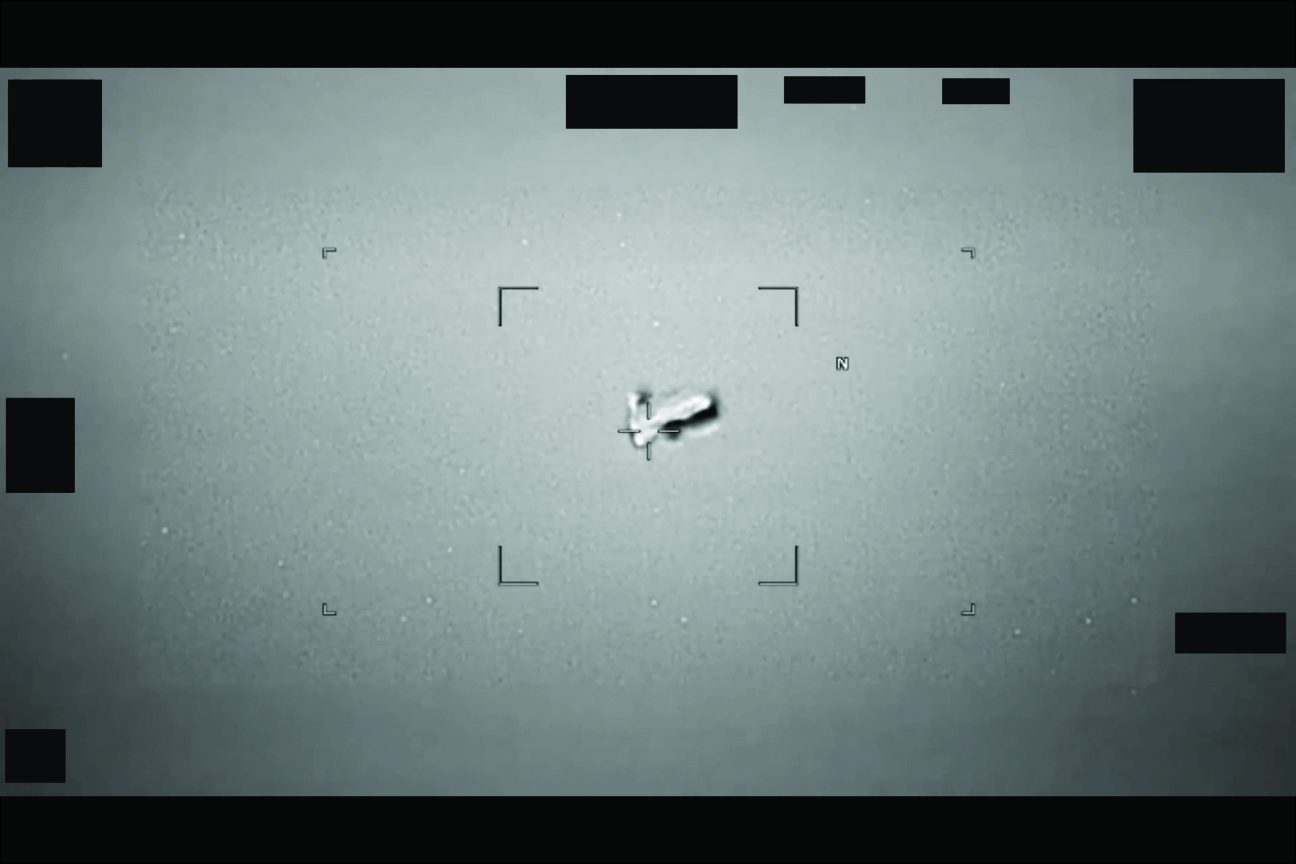
On May 11, 2026, Japan became the first allied government to formally respond to the U.S. PURSUE program release. Chief Cabinet Secretary Minoru Kihara — the Japanese government's top spokesman — addressed PURSUE at a regular news conference, confirming that Tokyo is "analyzing with great interest" the U.S. release, which included two videos of UAP near Japanese airspace. Kihara stated: "Regarding incidents related to our national security — including UAPs — we are constantly gathering and analyzing information with great interest, while maintaining close coordination with the United States and other countries." Most significantly, the Chief Cabinet Secretary confirmed that Japan possesses UAP data including video footage, and signaled that public disclosure of Japanese UAP files will begin within the limits of national security restrictions. Decisions on specific disclosures will be made case-by-case, weighing the protection of intelligence-gathering capabilities. The Kihara statement represents the first formal, on-the-record allied-government commitment to UAP disclosure in coordination with the U.S. PURSUE framework.
On May 12, 2026, former AATIP director Luis Elizondo publicly confirmed that Japan has been seeking a bilateral information-sharing agreement with the U.S. on UAP, citing increased frequency of UAP encounters near Japanese airspace. Japan's institutional trajectory — Parliamentary Caucus pre-positioning in 2024, Nakatani Ministry-level engagement in 2025, formal Caucus proposal aligned with the Trump directive in March 2026, and Cabinet-level disclosure commitment in May 2026 — now positions it as the most institutionally coordinated allied response to U.S. UAP disclosure on record.
U.S. Indo-Pacific Command, near Japan. Reported UAP resembling a football-shaped body, captured by an infrared sensor and released through the U.S. PURSUE program. The two videos of UAP near Japanese airspace in the U.S. release are the same material Japan's Chief Cabinet Secretary Minoru Kihara confirmed Tokyo is "analyzing with great interest" — the documented intersection of U.S. disclosure and Japan's institutional response. Source: Department of War / U.S. INDOPACOM, released via war.gov/UFO.
Australia
RAAF UFO files — 1950s to 1996
The Royal Australian Air Force investigated UFO reports from the 1950s through 1996, when responsibility was formally devolved to civilian channels. The historical files have been released through the National Archives of Australia. Notable cases include the 1966 Westall school incident and the 1978 Valentich disappearance — a pilot who vanished while reporting an unidentified craft over Bass Strait, with his transmission recorded but no wreckage ever found.
New Zealand
NZDF Project Blue Book files — 1952 to 1984
The New Zealand Defence Force maintained UFO investigation files from 1952 to 1984, released to the public through Archives New Zealand in 2010. The collection spans over 2,000 pages including the 1978 Kaikoura lights incident — a multi-witness, radar-and-film-corroborated case involving multiple unidentified objects tracked by air traffic control over multiple sequential nights.
Other Notable Programs
Russia
Soviet and Russian military investigations — 1978 onward
The Soviet Ministry of Defence established a formal UAP investigation program in 1978 in response to the September 1977 Petrozavodsk Phenomenon, which generated thousands of witness reports across the USSR. The program produced approximately 400 reports over the following decade. Selected materials have been released through Russian state archives in subsequent decades, though much of the documentation remains classified or has been only partially translated for international researchers.
China
PLA Air Force UAP unit — disclosed 2021
In May 2021, Chinese state media reported that the People's Liberation Army Air Force operates a dedicated unit responsible for analyzing UAP incidents in Chinese airspace, employing artificial intelligence systems for pattern detection across reports. This disclosure occurred shortly after the U.S. ODNI's preliminary UAP assessment to Congress and was widely interpreted as parallel positioning. China has not released specific case data publicly, but the existence of the program is now officially acknowledged.
What This Reveals
Two patterns emerge from the international landscape. The first is that UAP investigation is genuinely global — not a feature of American politics or culture. Thirteen national governments across five continents, spanning capitalist and communist systems, allied and adversarial nations, have all established formal mechanisms for investigating unidentified aerial phenomena. The phenomenon, whatever it is, presents itself across jurisdictions.
The second pattern is divergent transparency. France and Chile run scientifically rigorous, publicly accessible programs. The UK has fully retired its desk and released files. Brazil and Latin American partners maintain active programs with mixed transparency. The U.S., Russia, and China all operate active programs with limited public disclosure. Japan formalized reporting only recently. The variation is significant: any future confirmation scenario would propagate through these institutional channels at radically different speeds, with potentially uncoordinated public messaging across major powers.
For the First.Contact domain, this international context strengthens — rather than weakens — the strategic positioning. Whatever the U.S. ultimately discloses, it will be received against a backdrop of decades of foreign government investigation. The domain functions as the singular communications address regardless of which nation makes the consequential announcement. To understand how this institutional history connects to current U.S. developments, see our UAP disclosure timeline and coverage of 3I/ATLAS.
First.Contact is available for acquisition by qualified institutional parties.